Oysters & Crisp Wine: Why the Sierra Foothills Belong on the Half Shell
There’s a stubborn myth that great oyster wine has to come from somewhere you can smell the ocean. Chablis, Muscadet, Albariño from the Atlantic coast — wines that grew up within sight of the water.
We’d like to challenge that idea.
Oysters are indifferent to the geographic origin of wine; what truly matters are its levels of acidity, salinity, and overall balance. In the Sierra Foothills, the combination of granite and volcanic soils, significant elevation, and cool nighttime temperatures produces wines with these essential characteristics. Much like classic oyster wines from coastal regions, our wines are low in alcohol, exhibit bright acidity, pronounced minerality, and remain very dry.
We’re putting this idea to the test with four crisp Andis wines, plenty of raw oysters, and the best views in the region.
What Actually Makes a Wine Work With Raw Oysters
Before we get to the pairings, let’s cover the basics. If you know these three principles, you can pair oysters with wine anywhere, no guide needed.
1. Acid is the squeeze of lemon.
Oysters are soft, salty, and slightly sweet, with a creamy finish. Acidity cuts through that texture and refreshes your palate after each bite. If a wine makes you want a lemon wedge, it probably needs more acid. The best wine acts like the lemon itself.
Oysters are soft, salty, and slightly sweet, with a creamy finish. Acidity cuts through that texture and refreshes your palate after each bite. If a wine makes you want a lemon wedge, it probably needs more acid. The best wine acts like the lemon itself.
2. Salinity mirrors the brine.
Oysters reflect the water they come from. Wines with a salty, stony, or shell-like quality match that flavor and make the pairing seamless. Instead of two separate tastes, you get one continuous flavor.
Oysters reflect the water they come from. Wines with a salty, stony, or shell-like quality match that flavor and make the pairing seamless. Instead of two separate tastes, you get one continuous flavor.
3. Restraint wins. Oak and tannin lose.
This is where many pairings go wrong. Tannins with oysters create a metallic, tinny taste, which is why big red wines and raw shellfish don’t mix. Heavy oak covers up the oyster’s flavor, and high alcohol feels harsh with something so delicate. Choose wines under 13.5% ABV, made in stainless steel, with little or no oak.
This is where many pairings go wrong. Tannins with oysters create a metallic, tinny taste, which is why big red wines and raw shellfish don’t mix. Heavy oak covers up the oyster’s flavor, and high alcohol feels harsh with something so delicate. Choose wines under 13.5% ABV, made in stainless steel, with little or no oak.
That’s the formula: high acid, low alcohol, salty minerality, and no heavy oak. Now, let’s look at the wines.
The Four Pours
Our not-so-secret weapon, and the one we’re proudest of.
Arinto is a Portuguese white grape, and one of the six varieties usually blended into Vinho Verde. Our co-founder Andy Friedlander has enjoyed Vinho Verde for years and wanted to create something similar here. Sacramento grocer Darrell Corti suggested Arinto, and our neighbors George and Wendy Rab planted it on their rocky ridge nearby. That area is now the Ionian Vineyard, and Andis was the first winery in California to bottle Arinto as a single-varietal wine.
Northern Portugal, where Arinto grows best, is hilly and rocky, much like our own foothills. The grape holds its acidity even in warm climates, which is exactly what we wanted.
In the glass, you’ll find citrus zest, green apple, white blossom, and a lingering chalky, salty edge.
Why it works: This is the ideal oyster wine for purists. It’s lean, mineral, and very dry, with no fruit sweetness to distract from the oyster. It pairs best with briny East Coast–style oysters, where the wine’s saltiness matches the oyster’s perfectly.
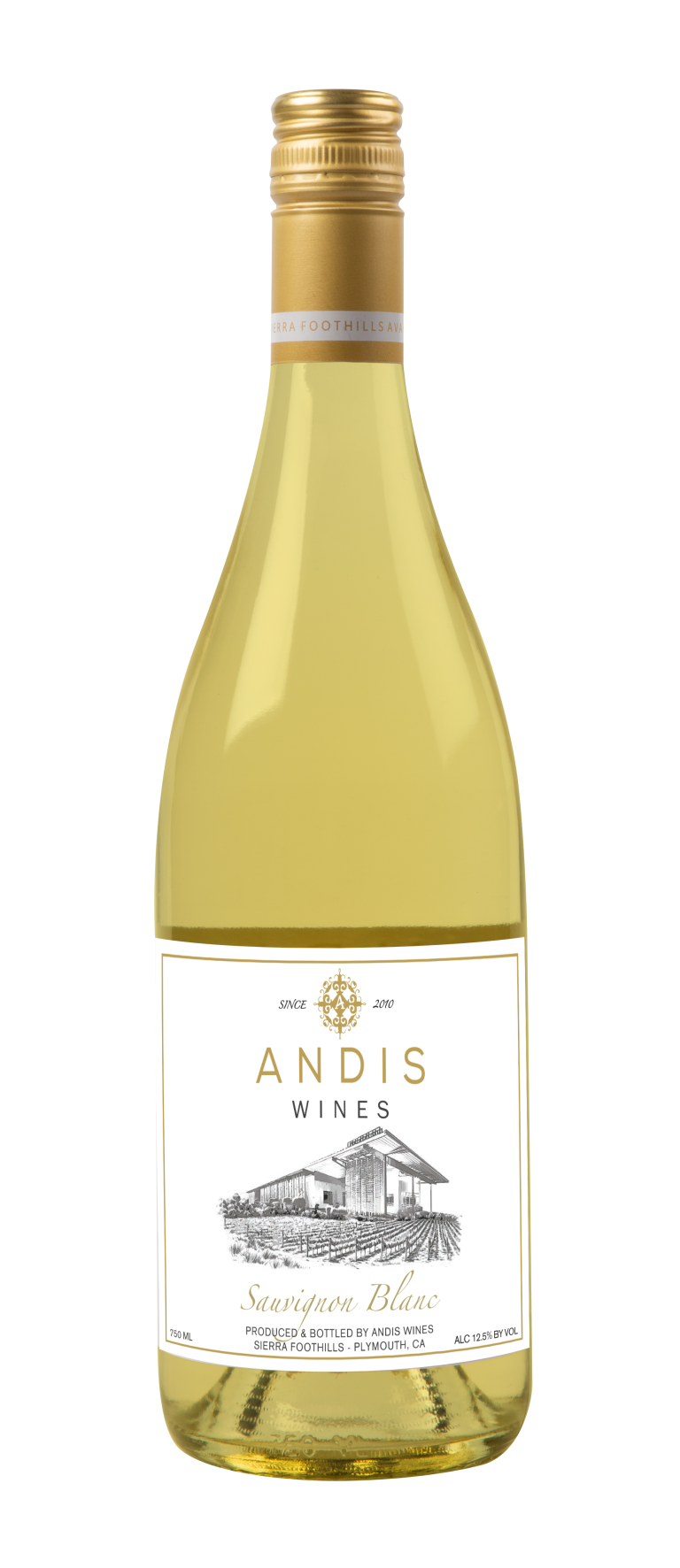
This is our most popular white wine, and for good reason. It’s fermented in stainless steel and aged briefly on the lees for texture. The grapes come from low-yield foothill vineyards, some dry-farmed and some with vines over forty years old.
In the glass, you’ll taste melon, grapefruit, lemon zest, a hint of cut grass, and tropical fruit on the finish, all balanced by bright acidity and about 12.7% alcohol.
Why it works: The grassy, herbal notes in Sauvignon Blanc act like an herb garnish, adding a fresh flavor the oyster lacks. Lees aging gives the wine enough body to match creamier, plumper oysters. This wine is best with Kumamotos or Pacific oysters,
which are sweeter and more melon-like than salty.
This wine is named for the harvest season, when winemakers spend long hours in the cellar, and their families hardly see them. Every year, someone becomes a harvest widow. This wine is our way of saying sorry.
It’s a Provençal-style blend of Grenache, Cinsault, Syrah, and a splash of Arinto for extra brightness.
In the glass, it’s a pale salmon color. You’ll notice wild strawberry, white peach, and citrus zest on the nose, with watermelon rind, rose petal, and a subtle salty note on a crisp, focused palate. The finish is mineral and refreshing.
Why it works: Dry rosé is often overlooked with raw oysters. It has the acidity of a white wine and a hint of red fruit aroma that pairs well with mignonette, a classic vinegar-based sauce for oysters, especially when prepared with shallot and pink peppercorn. The salty finish balances the flavors. There’s no residual sweetness, which is important—a sweet rosé would overpower the oyster.
Our Italian partner Lorenzo Muslia named this wine. Succulento means “juicy and delectable,” like biting into a Red Delicious apple.
This is a Brut Rosé made from Barbera using the traditional Charmat method, where the second fermentation happens in a tank instead of a bottle. This process keeps the wine’s fresh fruit flavors, which are often lost in longer-aged sparkling wines. About 30% of the wine is aged in barrels and partially goes through malolactic fermentation, adding a warm, toasty note to the finish.
In the glass, you’ll taste red apple and tart cherry, with soft bubbles and a toasty finish. It’s like a French rosé with bubbles.
Why it works: Bubbles help refresh your palate, making sparkling wine a great match for oysters. Each sip keeps the flavors lively, even after several oysters. The tart cherry acidity acts like lemon, and the toasty finish matches the oyster’s creamy center. If you only have one glass, choose this one.
Small Things That Make a Big Difference
Skip the cocktail sauce. Horseradish and ketchup will overpower every wine here. A classic mignonette—made with shallot, cracked pepper, and a splash of wine vinegar—shares flavors with the wine and complements it.
Drink the oyster liquor. The brine in the shell is essential. Enjoy it with the oyster, then take a sip of wine.
Don’t over-chill your wine. If it’s too cold, you’ll lose the aromas. Whites and rosé are best at 45–50°F, with sparkling wines a bit cooler. Let your glass warm slightly in your hand to help the wine open up.
Choose the wine first, then match the oyster. Briny, mineral oysters pair best with Arinto. Sweet, melon-flavored oysters go well with Sauvignon Blanc. Sparkling wine works with any oyster. Approaching pairings in this way ensures an optimal balance of flavors, highlighting the unique qualities of both the wine and the oysters.
FAQ
What wine goes best with oysters?
Crisp, dry wines with high acidity, low alcohol, and mineral or saline notes pair best with oysters.
Does rosé pair with oysters?
Yes, dry rosé can pair beautifully with oysters, especially when served with mignonette.
Can sparkling wine pair with oysters?
Yes. Sparkling wine is one of the best oyster pairings because the bubbles refresh the palate and complement the oyster’s texture.
Should you drink red wine with oysters?
Most red wines are not ideal with raw oysters because tannins can create a metallic taste.